ChatGPT vs. Real Conversation: How to Use AI Without Killing Student Speaking Skills
Discover how to effectively combine ChatGPT with real conversation practice to boost your language skills. Master your speaking abilities while embracing the power of AI.
Introduction
In the rapidly evolving world of language acquisition, technology has opened up new avenues for learning. A notable player in this space is ChatGPT, an AI-driven tool that provides instant conversation practice, vocabulary suggestions, and grammar corrections. However, while AI can enhance the learning experience, the conversation remains a cornerstone of language proficiency. So, how do we harness the power of ChatGPT without diminishing student speaking skills? This blog post delves into the nuances of using AI tools effectively while maintaining the integrity of real-life conversation practice.
Understanding the Role of AI in Language Learning
The Benefits of ChatGPT
ChatGPT offers several advantages that can aid language learners:
- 24/7 Availability: Learners can practice English at their convenience, regardless of time and location.
- Instant Feedback: The AI provides immediate corrections and suggestions to improve grammar and pronunciation.
- Non-Judgmental Practice Environment: Students can practice speaking without the fear of making mistakes in front of others.
The Limitations of ChatGPT
However, it’s essential to recognize the limitations:
- Lack of Emotional Nuance: AI cannot fully replicate human emotions or the subtleties of verbal communication.
- Unpredictable Responses: Conversations may not always reflect real-life situations, making it challenging to prepare for spontaneous dialogues.
- Over-reliance on Technology: Excessive use of AI can lead to neglecting face-to-face practice, which is crucial for fluency.
Balancing AI Use with Real Conversation Practice
To develop proficient speaking skills, it’s vital to strike a balance between AI interactions and real conversations. Here are some strategies:
Establish a Routine
-
Daily AI Practice: Dedicate a portion of your day to practicing with ChatGPT.
- Focus on specific topics or scenarios related to daily life or work.
- Aim for about 15-30 minutes each session to keep it manageable.
-
Weekly Real Conversations: Pair your AI sessions with real conversations.
- Engage in language exchange meetups or online video chats.
- Find a conversation partner through platforms like Tandem or HelloTalk.
Incorporate AI Insights into Real Conversations
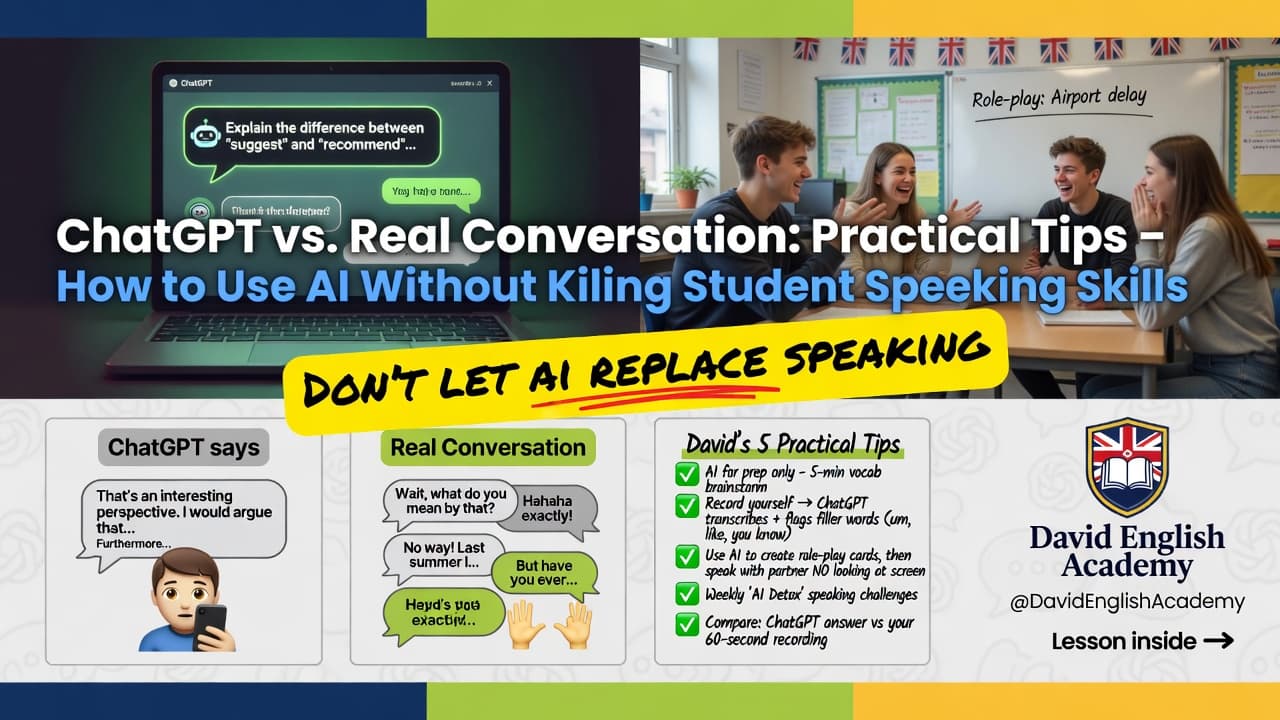
- Using ChatGPT for Preparation: Before a conversation, use ChatGPT to generate questions or topics to discuss. For instance, if you plan to talk about travel, ask the AI for relevant vocabulary or phrases.
- Role-Playing Scenarios: Use ChatGPT to role-play different situations like ordering food, job interviews, or casual chats. Take notes on the responses and practice them during your next real conversation.
Practicing Active Listening
Real conversations involve listening as much as speaking. Here’s how to sharpen your active listening skills:
- Summarize During Conversations: After the other person speaks, summarize what they said before responding. This shows that you are engaged and helps improve comprehension.
- Ask Follow-Up Questions: Building on what the other person said can create a more natural flow of conversation.
Tips for Maximizing Speaking Skills
Use the "Speak and Listen" Technique
Combine speaking with listening to reinforce your skills:
- Read Aloud: Use ChatGPT to provide texts on various topics, and read them aloud for pronunciation practice.
- Record Conversations: Tape your sessions with ChatGPT and listen back to identify areas for improvement.
Engage in Topic Variation
Practice with different subjects to broaden your vocabulary:
- Technology: Discuss the impact of AI on our lives.
- Culture: Talk about food, traditions, and festivals from different cultures.
- Current Events: Use news articles to generate conversation topics, enhancing both vocabulary and comprehension.
Seek Feedback
Feedback is crucial for growth:
- Peer Review: After a conversation, request feedback from your conversation partner about your language use and fluency.
- Use ChatGPT for Corrections: After practicing a conversation, ask the AI for feedback on your speech.
The Importance of Contextual Learning
ChatGPT can provide information, but real conversations bring context and relevance. Here's how to incorporate context into your learning:
Real-Life Scenarios
- Join Clubs or Groups: Participate in clubs or groups that focus on topics you're passionate about. For instance:
- Book clubs for literature enthusiasts
- Language clubs focusing on English communication
Mixed Methods of Learning
Combine AI and human interaction:
- Attend Workshops: Look for language workshops that emphasize speaking skills.
- Mix Lessons with AI: After learning a new topic, practice discussing it with ChatGPT before engaging in real conversations.
Conclusion
While ChatGPT presents unique opportunities for language learners, the traditional art of conversation cannot be overlooked. By skillfully balancing the use of AI and real-life interaction, learners can develop strong speaking skills without compromising their proficiency. Remember, AI should be an ally, not a replacement. Embrace its advantages while continuing to engage with people in meaningful conversations. Trust the journey, and flourish in your language-learning adventure!
“Practice is not about perfection. Practice is about making progress.” – Unknown
Utilize both AI and real conversations to become a confident and effective communicator in English. Happy learning!